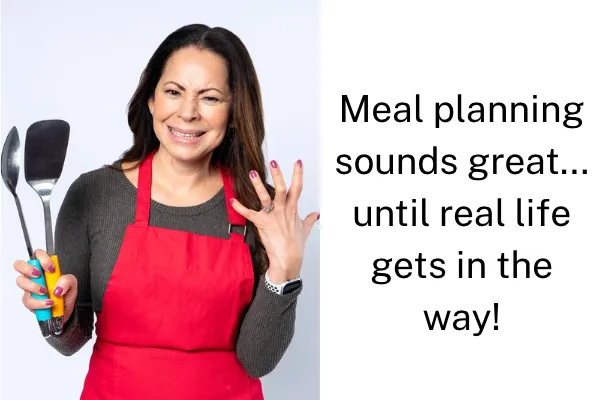
Meal planning sounds great... until real life gets in the way.
There’s no denying that eating more home-cooked meals, choosing more whole foods and relying less on processed foods can make a meaningful difference to your nutrition and, ultimately, your health goals. We know this. So why is it so hard to put into practice?
Many women I work with want to eat better, have healthier options ready to go and feel less stressed and more in control around food. But between work, family and everything else, they often end up eating the same way they always have. They start the week with good intentions, but before they know it, they're ordering takeout or throwing together whatever they can find in the fridge.
What if we approached meal planning from a different angle?
Here's something you can do today to make it a little easier:
1. Figure out what's getting in your way
Is it deciding WHAT to cook? Is it finding the time to prep ingredients? Is it knowing what to buy at the grocery store? Or getting home after a long day and having absolutely no energy to make dinner?
These might sound like small things, but they can make a big difference in how consistently you eat and how well you're able to nourish yourself.
And here's the thing: the solution might look different depending on what's getting in your way. Maybe you don't need more recipes. Maybe you need a better way to organize your week. Or maybe you're trying to follow a meal plan that just doesn't work with your schedule, food preferences or family life.
2. Assess what you can realistically manage
How far ahead do you actually need to plan your meals?
Maybe you don't need to spend your Sunday cooking for the entire week. Maybe you just need a few simple ingredients ready to go, so you can assemble meals instead of having to cook everything from scratch. This is a common roadblock!
You could also replenish those ingredients a couple of times during the week rather than trying to do everything in one big grocery shop.
And here's something to consider: if you struggle with organizing tomorrow's dinner, how can you expect to stick to a seven-day meal plan? Start where you are.
3. How many meals can you influence this week?
If you feel confident you can tackle breakfast, start there. That alone puts you in a better position to start your day with a nourishing meal. And who knows? Maybe that gives you the motivation to start thinking about lunch, too.
P.S. Since you nailed breakfast, how about breakfast for dinner?
You don't have to change every meal overnight. Small changes can add up to big payoffs.
You don't have to figure it all out on your own.
This is something I work on with women every day through my nutrition coaching.
As a Midlife Fitness & Nutrition Coach, I help women move beyond generic meal plans and conflicting nutrition advice to build an approach that works with their goals, lifestyle, food preferences and the realities of everyday life.
We'll look at where you're struggling, what could make the biggest difference and where to start. You'll get practical guidance, realistic strategies and support to help you put things into action.
Because you don't need another list of things you should be doing. You need a plan that makes sense for YOU