Protein in Midlife: Are You Eating Too Little… or Too Much?
If you follow any health or fitness advice these days, you’ve probably heard the same message over and over:
“Eat more protein.”
And it’s true. Protein becomes especially important for women in midlife. It helps maintain and build muscle, supports metabolism and immunity, and keeps you feeling satisfied between meals.
But here’s what I notice with many women I work with:
Some are not eating enough protein, while others are so focused on protein that the rest of the meal gets pushed aside.
Both approaches can create problems. Some women end up hungry and chasing snacks all day, while others feel bloated or uncomfortable because their meals are missing key nutrients like fibre.
How Much Protein Do You Actually Need?
If you’ve ever tried to look this up, you’ve probably noticed… the recommendations are all over the place.
🔹 Health Canada recommends about 0.8g per kg of body weight per day
🔹 The Stanford Center on Longevity suggests closer to 1.2–2g per kg
🔹 And Dr. Stacy Sims, a leading expert in female physiology and nutrition, recommends a minimum of 1.6g per kg, with active women needing up to 2.3g per kg
So… which one is right?
The truth is, these recommendations are based on different goals.
The lower end is the minimum to prevent deficiency
The higher ranges support muscle, metabolism, recovery, and overall health, especially important in midlife
And this is where many women get stuck.
They either:
Under-eat protein because they think they don’t need that much
Or overdo it, trying to hit high numbers without thinking about balance
1. The “Protein At All Costs” Approach
Some women have taken the message to eat more protein and turned it into:
“The more protein, the better.”
This can show up in meals like:
Protein powder added to coffee for breakfast
Protein bars or shakes replacing meals
Large portions of meat with little else on the plate
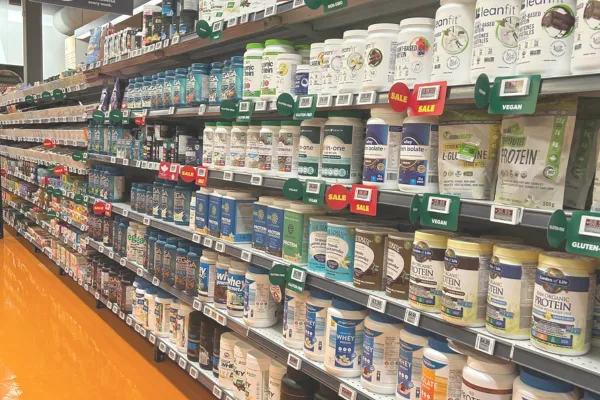
A cart full of “high-protein” packaged foods (bars, cookies, shakes, snacks)
The problem? When protein dominates your plate, other important nutrients often get left behind, especially fibre-rich foods.
Many packaged “high-protein” products are also high in saturated fats, sugar, and additives. While they boost protein, they can:
Cause digestive issues, bloating, or constipation
Make it harder to manage cholesterol and blood sugar
Work against your goal of losing weight
If most of your protein comes from animal foods, this can further increase saturated fat intake, which may contribute to risk factors for later-life health concerns.
Another key point: your body uses protein more efficiently when it’s spread across meals, rather than eaten all at once.
2. The “Diet Mode” Plate
At the other extreme are women who are trying to cut calories to lose weight.
Their meals might look like this:
A big salad with just a small sprinkle of chicken or tofu.
Technically, it’s a healthy meal but it often doesn’t contain enough protein or fibre to keep you satisfied.
A few hours later, hunger hits. You might also experience:
Chronic fatigue or irritability
Catching every cold that goes around
Soreness, slower recovery, or even more injuries if you’re active
Ironically, eating too little protein can make weight loss harder, because your body keeps signaling for more food throughout the day.
3. The Balanced Plate That Works
Instead of extremes, what works best for most midlife women is balance.
A simple guideline I often recommend is aiming for about 25–30 grams of protein per meal.
This amount helps support:
Muscle maintenance
Metabolism
Steady energy throughout the day
But protein shouldn’t be the only thing on your plate.
A satisfying, balanced meal usually includes three key components:
1. Protein (about 25–30g per meal)
Examples: chicken, fish, eggs, tofu, Greek yogurt, cottage cheese, beans, lentils
2. Fibre-rich foods (aim for ~25g per day)
Examples: vegetables, fruit, beans, lentils, whole grains
3. Healthy fats (choose wisely)
Examples: olive oil, avocado, nuts, seeds
When your meals include these three components, something powerful happens:
✔ You feel fuller for longer
✔ You’re less likely to reach for snacks
✔ You stay energized throughout the day
✔ Your workouts and muscle building are better supported
It doesn’t need to be perfect, just aim for a balanced plate most of the time.
What Does Your Balanced Plate Look Like?
Nutrition advice online can be confusing.
Some messages push extreme protein intake, while others leave women undereating without realizing it.
The sweet spot is usually somewhere in the middle.
If you’d like help figuring out what your balanced plate should look like — based on your lifestyle, goals, and stage of menopause — I’d be happy to help.
You can book a consultation with me:
• Virtually
• Or in person at Restore Integrative Health in Leslieville, Toronto
Together we can build a nutrition approach that helps you feel stronger, more energized, and more confident in your body.